How can you support your child’s communication and social interactions?
If your child has been diagnosed with autism spectrum disorder (ASD), it is natural to have questions about how you can best support their development. There is no single way to communicate and no strategy that works the same way for every child. The most important thing is to understand their strengths, interests, and needs.
Communication does not always happen through words. Your child may also communicate through eye gaze, gestures, sounds, movements, pictures, or other forms of communication.
Some strategies you can try:
- Follow their interests: observe what captures their attention and join their play. Sharing what they enjoy can create opportunities for communication.
- Talk about what you are doing together: use simple words to describe what your child is seeing, doing, or feeling.
- Give them time to respond: after talking to your child or asking a question, wait a few seconds. There is no need to answer for them right away.
- Respond to their attempts to communicate: a look, gesture, sound, or movement can also be a way of starting an interaction.
- Take turns during play: simple activities such as rolling a ball, building with blocks, or singing songs with pauses can help practice back-and-forth interaction.
- Use visual supports when helpful: pictures, gestures, or visual schedules can support understanding and expression for some children.
- Avoid forcing eye contact: looking into someone’s eyes is not the only way to pay attention or show interest. What matters is supporting comfortable and meaningful communication.
Each child needs individualized support
Strategies that work for one child may not work in the same way for another. A professional specializing in child development, language, or communication can help you identify the best ways to support your child.
It is not about teaching your child to communicate in only one way, but about finding ways for them to express what they think, feel, and need, and connect with the people around them.
The importance of being present in your child’s development
Although every child develops at their own pace, being present and observing how your child communicates, plays, and interacts with us helps us better understand how they learn and recognize when they may need additional support.
During the early years, everyday interactions are an important part of development. Talking with your child, responding to their gestures and sounds, playing together, and following their interests create opportunities for learning while strengthening communication and connection.
Why is it important to be present?
A present and attentive adult can notice small changes and developmental progress that might otherwise go unnoticed. Observing how your child plays, expresses their needs, responds to others, and reacts to different situations can help you better understand their development.
And being present is not just about observing. Your presence also creates opportunities for learning:
- Respond when your child tries to communicate, even if they are not using words yet.
- Follow their interests during play and join in what captures their attention.
- Talk to them, ask questions, and give them time to respond.
- Share smiles, gestures, sounds, and back-and-forth play.
- Support them calmly when something new or different feels difficult.
These interactions can be especially valuable for children who have developmental differences, including autism. Support is not about changing who a child is, but about helping them communicate, participate, and develop skills according to their individual needs.
What difference does early detection make?
Early detection allows us to recognize a child’s needs sooner and seek appropriate support without waiting for difficulties to become more significant. When a need is identified early, families and professionals can work together to provide strategies and support adapted to the child.
For autistic children, early identification can help them access timely interventions and services that support communication, learning, participation, and well-being.
Being present helps us understand our children. Detecting needs early helps us support them better.
The importance of early stimulation and early intervention
Being a mother, father, or caregiver is an experience filled with love, challenges, and constant learning. It can also be difficult to see your child having difficulties with speaking, walking, playing, or interacting with others.
It is important to remember that every child develops differently. Having a difficulty in one area of development does not define your child or determine what they will be able to achieve. The right support can help them develop their skills and actively participate in their environment.
In these cases, early intervention can be very important. It refers to support and services provided to young children who have a developmental difficulty or are at risk of experiencing one. This support is adapted to each child’s needs and can involve professionals and their family.
Early intervention can help:
- Strengthen communication and language skills.
- Support motor development and independence.
- Promote learning and participation in everyday activities.
- Strengthen social skills and interactions with others.
- Guide families in supporting their children’s development in everyday life.
Why is early intervention important?
During the early years, the brain has a great capacity to learn and adapt. Providing support when a need is identified can promote development and help children build important skills for everyday life.
This does not mean that there is a “limited window” for learning. Children can learn and develop new skills throughout their lives. Early intervention simply allows us to take advantage of learning opportunities during the early years and provide support when it is most needed.
If you have any concerns about your child’s development, talk to their pediatrician or a specialized professional. Seeking guidance can help you find the right tools to support your child.
Early signs of language development difficulties
Remember: every child develops language at their own pace. Differences in when or how a child develops a skill do not necessarily mean that there is a problem. These signs are intended to help you observe your child’s development, not to diagnose them.
Language develops gradually during the early years. Through sounds, gestures, words, and conversations, children begin to express their needs, ideas, and emotions and connect with the people around them.
Some signs we can pay attention to include:
- Not babbling or making communicative sounds during the first year.
- Not using gestures, such as pointing or waving, to communicate.
- Not consistently responding when spoken to or when their name is called.
- Having difficulty understanding words or simple instructions appropriate for their age.
- Using fewer words than expected for their age or having difficulty combining words when this is expected.
- Having difficulty expressing what they need or want through words, gestures, or other forms of communication.
- Losing words or communication skills they had previously acquired.
It is important to observe both understanding and expression, as well as the child’s desire to communicate. Children can develop these skills at different rates, so one sign alone does not indicate a language delay or disorder.
If you have concerns about how your child communicates, talk to their pediatrician or a professional who specializes in child development and language. Identifying a possible difficulty early can help you understand your child’s needs and, when appropriate, access the right support in a timely manner.
Talking, listening, responding, and playing with your child every day can also help support their language development.
Early signs of a developmental disability
Remember: these signs are not a diagnosis and do not necessarily mean that your child has a developmental disability. Every child develops differently. This information is intended to help you recognize some signs to pay attention to and know when it may be helpful to consult a professional.
Identifying early signs of a developmental disability is important so that children can receive support and early intervention when needed. These supports can promote children’s well-being, learning, and development.
Some signs we can pay attention to include:
- Not reaching some developmental milestones expected for their age.
- Having persistent difficulties communicating with or understanding others.
- Having difficulties with movements or motor skills expected for their age.
- Having difficulties learning new skills.
- Having difficulties interacting, communicating, or playing with others.
- Having difficulties carrying out everyday activities appropriate for their age.
- Losing skills they had previously acquired.
It is important to remember that one sign on its own does not mean that a child has a developmental disability. Children may develop at different rates, and a professional evaluation can provide a comprehensive understanding of their development.
If you have concerns or something about your child’s development worries you, talk to their pediatrician or a professional who specializes in child development. Early identification can help children access the support they need as soon as possible.
Observing, listening, and supporting your child’s development is one way to care for them.
Common types of developmental disabilities and disorders
Before you read: learning about these conditions does not mean looking for a label for your child. Every child develops differently, and only a professional can determine, through an evaluation, whether a child has a developmental disability or disorder.
During childhood, different conditions can affect development. Some may mainly affect learning, while others may affect communication, social interaction, movement, or several areas at the same time.
Some of the most common include:
- Intellectual disability: can affect learning, problem-solving, and the skills needed to manage everyday life.
- Autism spectrum disorder (ASD): can affect communication, social interaction, and the way a child responds to their environment. It is called a “spectrum” because its characteristics and support needs can vary greatly from one child to another.
- Language and communication disorders: can make it difficult to understand or express language and to communicate with others.
- Motor developmental disorders: can affect movement, coordination, balance, or the ability to carry out everyday activities.
- Specific learning disorders: affect skills such as reading, writing, or mathematics and often become more noticeable as academic demands increase.
These conditions do not look the same in every child. A child may need support in one area or several, and their strengths are also an important part of the evaluation.
If you have concerns about your child’s development, talk to their pediatrician or a professional who specializes in child development. Identifying a need early can help provide the right support and better accompany each child.
Understanding developmental differences helps us understand, not label.
Get to know your child’s development: signs to pay attention to
Before you read: these signs are not a way to diagnose or label your child.
Every child develops at their own pace, and one sign on its own does not mean that a child is on the autism spectrum. This information is intended to help you recognize some developmental characteristics that we can pay attention to and, if you have any concerns, know when to consult a professional.
Autism is a neurodevelopmental condition that can influence the way a person communicates, interacts with others, and responds to their environment.
We use the term “spectrum” because there is no single way in which autism presents itself. Characteristics, strengths, and support needs can vary greatly from one child to another. Therefore, observing one sign on its own does not provide enough information.
Some signs we can pay attention to include:
- Limited eye contact or difficulty maintaining it.
- Not consistently responding when their name is called.
- Showing little interest in sharing smiles, gestures, or emotions with others.
- Having difficulty pointing, showing objects, or sharing interests.
- Delays in language development or losing words they had previously learned.
- Repeating movements, sounds, or words frequently.
- Having a strong need to maintain certain routines or reacting intensely to changes.
- Showing unusual sensitivity to sounds, lights, textures, tastes, or other sensory experiences.
Remember! These signs are not a diagnosis. They are characteristics we can pay attention to, especially when several are present or when a child is not reaching some of the developmental milestones expected for their age.
If you notice any of these signs, have concerns about your child’s development, or notice that they have lost skills they previously had, talk to their pediatrician or a professional specialized in child development. A professional can assess your child’s development comprehensively.
The World Health Organization (WHO) notes that characteristics of autism can be detected in early childhood and recommends monitoring child development as part of routine healthcare. Early identification can help children access timely, evidence-based support.
Observing your child’s development is not about looking for a diagnosis. It is about getting to know your child better and supporting them in what they need.
LA SEÑORA CAJA
Objetivo:
Colocar los juguetes de vuelta a la caja después de usarlos.
Materiales:
- Caja de cartón
- Juguetes
- Marcadores
- Material de decoración
Experiencia de aprendizaje:
Es importante que determines horas y espacio de juego para tu peque y para esto vamos a crear una caja especial para guardar sus juguetes, “La Señora Caja”.
Invita a tu peque a crear una caja especial, siéntense juntos en el suelo con todos los materiales para decorar y dile que esa es su caja y la puede decorar como quiera, la van a nombrar “La Señora Caja”. Cuándo la caja esté lista y decorda, pídele a tu peque escoja los juguetes que quiere guardar en ella, y juntos pueden irlos a traer y colocarlos dentro. Lléva luego la caja a una habitación en la que pueda jugar con los juguetes. Invita a tu peque a jugar juntos. Al terminar de jugar vas a apoyar a tu peque explicándole que debe guardar las cosas en la “Señora Caja” al terminar de usarlos y van a ir repitiendo la siguiente frase
“A guardar, a guardar cada cosa en su lugar”.
Al momento de guardar las cosas tu peque asociará la canción con colocar sus juguetes donde pertenecen después de usarlos dentro de la señora caja de juguetes. Repite todos los días para hacer de este un hábito.
Esta actividad busca desarrollar en tu peque el orden de las cosas, el seguimiento de instrucciones y su independencia.
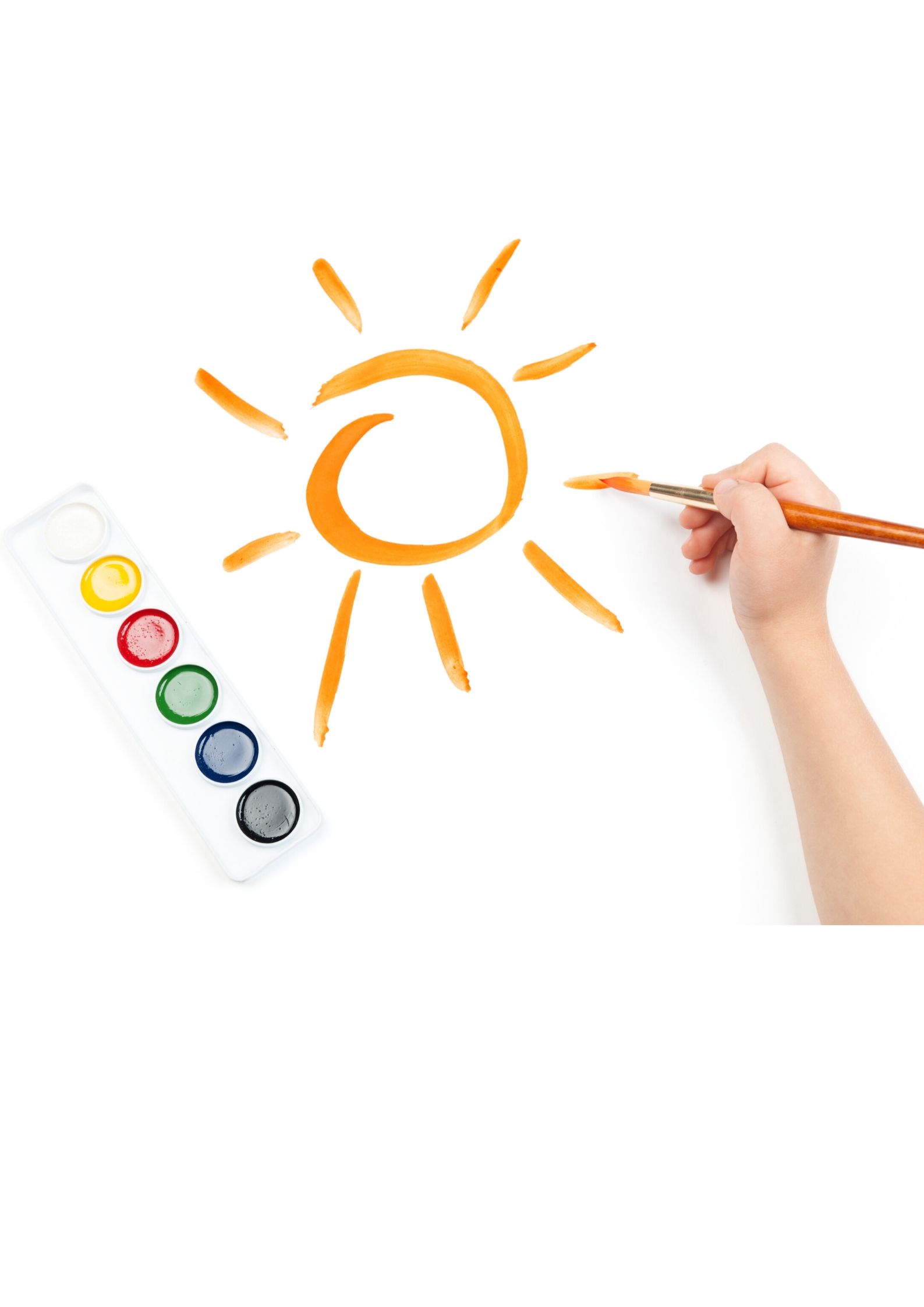
Painting buddy
Objective:
Follow instructions and wait for one´s turn while having fun painting.
Materials:
- Paint
- Painting brush
- Crayons or markers
- Drawing paper and easel or marker boards or clipboards
Learning experience:
Set two large pieces of paper side by side on a table or clip them next to each other on a large easel. Tell your little one that he is the leader and instruct him to paint a picture, one step at a time. You or another partner are going to follow the leader, painting the exact same shapes and lines in the same places on your paper. Set a timer for a few minutes to indicate when that partner’s turn is over and then switch. If you think your child needs to see first how the activity is done, you may be the leader first.
A little twist: (1) Draw more complex pictures or put several simple shapes together to make a picture (e.g. a sailboat, a sun, a car). (2) Take the visual cue out of the equation and allow the leader to cue his partner verbally for what to paint next.
Activities like this help your little one work on self-control, control his behavior, follow instructions, as well as paying attention, major components of the functional skills.
I DO IT YOU DO IT
Objective
Your child will be able to share and pass their toys on their own or if is requested.
Materials
- Your child’s favorite toys or objects.
Learning Experience
With this fun activity, your child will be able to play and share objects or toys knowing that sharing can be fun.
Invite your child to play a new game “I do it You do it” using the song “The wheels on the bus” rhyme, sing “this is the way I clap my hands, I clap my hands, I clap my hands while playing both together”, start with a simple action like clapping your hands, invite your child to follow your actions.
Sing the song again this time add another action and your baby’s name “this is the way [your child’s name] smiles, [your child’s name] smiles, [your child’s name] smiles while playing both together”, having fun together.
Now sing the song again, but this time show your child’s favorite toy and sing “this is the way we pass the toy, we pass the toy, we pass the toy while playing both together” while you hand the toy to your kid, sing it again and extend your hand to get it back, don’t forget to thank your little one and give the toy back so they understand that sharing is okay and they will get it back.
Keep playing a few more times while your child shows interest.